Youth is real.
Youth is a fairy tale.
Youth is the freshman year of adulthood.
Our society idolizes youth.
We block out the bad and the uncomfortable memories, memories that bring back a memory of a broken heart, the vulnerable moments we wanted to forget and never recall again.
But as the years pass, these are the memories we no longer fear. We are not embarrassed by painful rejections nor do we blame ourselves for the things over which we had no control. We are not different people, we're just more comfortable in our skin and perhaps enriched with cool confidence.
But youth is and always will be a pink cloud floating in and out of our existence. Sometimes we linger for too long in its midst, idealizing the moments when we felt on top of the world. This journey to the past is usually followed by nostalgic melancholy of "where has time gone".
The few who had the foresight of keeping a diary or a journal of our years of youthful endeavors are in luck. They can ride the roller coaster ride of their youth and recall memories otherwise forgotten. The rest of us dwell on the big moments, grand emotions and the heartache. It is an unfortunate truth that without written recollection or memories documented in photographs, the past really is the past, a forgotten past.
But the brain has a way of recalling forgotten memories from the depths of a long-forgotten storage space where old data is kept. With our senses alone, we recall faces and places and hey even daisies.
For me, my sense of smell often triggers a flash from my traveling past to countries and cities. The rich scent of sweet but piquant spices lures me back to the Grand Bazaar of Damascus where I walked alone at the age of 21, tasting tea in every shop I entered, and feeling happy and curious in the company of kind and the most jovial people I've ever met from whom I learnt hospitality.
From the song of crickets, I am returned to my 120 nights of sleeping in the open air in the Wadi Rum desert, camping off the red and dusty East African rural roads, and quiet sleeps in the thick bushland of conservation parks. In recent years, their song brings me back to the beautiful outskirts of Durban, the most colorful city in the world.
But it's the soundtrack of my life that bring me back to my fun pub days. Certain rock anthems remind me of the actual Fun Pub on the Greek Cyclades island of Ios, while World, Hold On and Jack Johnson 's Better Together reminds me of sweet moments with dear friends on that very same island.
David Gray's This Year's Love and The Other Side take me straight back to London in the early to mid 2000s.
Ralando o Tchan from the É o Tchan do Brasil album reminds me always of my magical year in Brazil as an exchange student, where I made beautiful memories in the dry rural regions of my country state Goiás on a fazenda (farmhouse), on a bus full of exchange students driving down the northeastern coast of the country and my brazilian family who gave me so much.
All these songs bring back a rush of feelings, intense and gentle, exciting and melancholy, and remind me of the wild ride of freedom I so enjoyed as a curious traveler. Life was a real adventure.
Even films are able to bring back a blast from the past; that, or a reminder of swift changes in the passing of time. Having said so much about youth, I just realized I am now two years older than Bridget Jones in the first movie. A bad TV night brought me to Bridget Jones's Diary and yes, I am two years older.
Not that it bothers me. The thirties (or any other time in life) are not a time when all women turn into desperate spinsters in need of fertilizing eggs and should all of a sudden be embarrassed for being single.
Time is after all is just a notion, a way to measure the passing of time and give place to host all the fabulous adventures we have in life. All of life is after all perception alone.
During one of our philosophical talks, my partner and I came to the conclusion that our whole existence as human beings originates within the confinements of our brain. Our feelings, thoughts, ideas, perception, our whole spiritual and bodily existence exists within the realms of one organ, our brain. It is literally our whole world.
That leads me to the conclusion that youth and aging are truly conceptual, a notion of the theatre that is life.
The instruments that tricker memories from hibernation are a time machine, a way to explore life through the wide lenses of frameless shades that change colour depending entirely on perception and mood.
Life would be so dull without all these accessories of life. And I love life, my life just the way it is, the way it was, and the enigmatic and glorious adventures of what will be.
Wednesday, 16 July 2014

Friday, 11 July 2014
The Downpour
On a beautiful day, a walk with Emma is simply wonderful. When the breeze is light as a leaf and the sun shines brightly, I always make sure to bring Emma to the beach for a swim to cool her down. She loves swimming and on the best of summer days, I dive in with her.
But the glorious days when together we've swam in an inviting Atlantic Ocean are so few that I can count the times in all of Emma's two years on one hand.
Thus, when I think of the Icelandic summer, I envision a writer in rags scribbling over a faint candlelight. In other words, it is about as unpredictable and unlikely as prosperous income for that impoverished writer in rags.
From start, the prospect is not good. The unpredictable unpredictability of summer is the underlying threat that lingers in the air all summer long.
For a few years, the unpredictability was a blessing in disguise. Days and days of sunshine and double-digit temperatures brought unexpected joy and bliss to the lives of the nation that otherwise lives in a permanent state of winter.
But this was before Emma came into our lives. Her first summer, the summer of 2012, was lovely and her first walks were out in the sun. Therefore, I looked forward to the summer of 2013. I was tired of the long and cold winter days. Yes, I still enjoyed watching her discover the snow and rolling in it with such passion that child's play pales in comparison.
But it was time for summer.
After the winter came spring, cool and wet as tradition calls for, but within the hopeful local awoke the idea of the idyllic summer, a fragile bubble waiting to burst and disperse all pending hopes of bliss. As unlikely as it is for the Icelandic summer to become the Greek summer of my dreams, I always expect bliss but instead catch a blizzard.
And last summer, all hope faded away in a never-ending downpour. Downpour after downpour, hope was crushed until its remaining ashes simply drifted in the direction of the more predictable mainland of Europe.
After a disappointing downpour of a summer and one hell of a stormy winter, I anxiously anticipated a surprise of a summer in 2014, a blast from the past with the sun high up in the sky and a mere breeze to move the air every now and then.
The summer season began with prosperity. May arrived in unseasonably festive spirits lifting hopes and raising expectations for the summer months to come.
My daily cycle to and from work was an awakening I simply couldn't go without. It was temptation at its best. Even though some days rain fell and strong breeze bombarded off the coast, most days gave reason to hope for the best.
But then came June, the month with the beautiful jovial name, and with it expectations of even more heartfelt joy.
But no, once again came the season of pounding downfall, the kind that pours its sorrows onto the lands below with such fierce that its inhabitants feel as if they are drowning in unknown sorrows.
But sorrow rarely travels alone. Its trusted companion, rage, raged in from the raging Atlantic - a sea perhaps enraged by its role as mankind's personal bin - and attacked with fierce blows that cooled the air with vicious windfall.
And thus has been the tale of summer so far. Wind and rain, rain and wind, barely giving the sun space enough to come out for an afternoon, let alone a whole day.
 |
| The summer of 2014 so far. Photo by JB |
Yesterday afternoon was like so many afternoons with my Emma in the local dog park. She was in her element playing with her dear four-legged friends while I stood in my raincoat - a raincoat I might add offers a fierce opposition in the worst of downpours - simply waiting for her to indicate to me that she too had enough of the very wet and cold rainfall that seemed to go on forever.
Therefore, when the play date came to an end, we bowed our heads and took a hike to our shelter of a home.
 |
| Walking in the rain. Photo by JB |
 |
| Stairs drowned in rainwater. Photo by JB |
Both Emma and I arrived home dripping as if we'd just walked out of a cold shower, me fully-dressed and Emma in her flawless-as-always birthday suit. It was far from the rural romantic return of the heroine and her dog to the lover's humble abodes.
 |
| Au-naturel re-fill for Miss Emma. Photo by JB |
 |
| A very wet dog. Photo by JB |
Yes, the immediate response of the romantic hero to the heroine's dour return was to dry the thick fur of a patient young dog while the heroine took a hot shower to quench the cold from her bones.
I am a fan of Jane Austen's pastoral (and feminist) romance, and in particular Persuasion in which rain plays a substantial part.
But after all this rain and wind, not one but two summers in a row, romance is the last thing that comes to mind in such foul weather, weather that is not only unpredictable but unseasonably bad, even for Icelandic summer.
But wait, summer just got more unpredictable. In the distance, the resounding of an invisible drum in an imaginary parade draws attention away from the misery in the skies above.
It is yet another unpredictable song of a summer that in truth has not yet arrived.
Sunday, 6 July 2014
The Shame and the Praise
Language is mankind's greatest creation, a tool that is powerful and diverse, that unites and divides and allows us to lead an infinite inner life to which we give meaning and feeling with words.
I believe language is periodical mirror. It is ever-changing and a reflection of our culture and the society we inhabit. In language, we can identify prejudice and passions, values and ideology through the vocabulary of a language. Language is a form of documentation that historians, linguists and literary scholars use as a vital tool in their academic work.
As a feminist scholar of language, I am in heaven. Words are all around me and opportunities to practice my scholarly art on every corner. Films are one such opportunity, although more often than not popular entertainment material disappoints the feminist scholar in me, a scholar I should add who would like to live in a world where men and women are free to be the person they are, dress the way they please and lead the life of their choosing.
This past Friday night, such an opportunity arrived as I watched a film, a romantic comedy intended to pass the time as I waited for my partner to return home.
It was an ordinary late Friday night. I didn't quite feel like watching a film that required serious attention, so I went for a non-brainer with what I hoped carried some entertainment value.
I selected That Awkward Moment. I figured something light-hearted with a dash of silly would do the trick. I expected the usual stereotyping as a feminist in the real world does on most occasions, but the constant perpetuation of misogynistic notions really got to me this time.
Every time one of the characters, in particular the female characters, used the word "pussy" as an insult, I wanted to cry. How could women degrade their own body without a thought of this blatant abuse of the word?
Why is it that in our beautiful language that is English, we metaphorically express cowardice and bravery with the same words we have for the female and male organs that continue life?
Why is it socially acceptable to call someone a "pussy" and with it imply cowardice? Why is it a compliment to say to someone "you got balls" and with it imply bravery?
Why is it necessary at all to implicate our procreational organs, our private parts, in concepts such as cowardice and bravery, linguistic concepts that in reality are vague and subject to interpretation, and should therefore be void of attachment to bodily organs or other physical material.
This use of language is tainted with the story of Adam and Eve, in which Eve shames mankind by falling into temptation, and then offering Adam to share her sin. And who's to blame? Well, Eve obviously. Not Satan despite him being the one to offer her the apple and encouraging her shamelessly to accept his gift. From this myth alone, we have slut shaming, a fallacious and one-sided misplacement of guilt.
A woman who is raped wearing a short skirt and high boots is surely to blame as she offered her body to the world the moment she got dressed. The culprit is never the individual who forced himself upon her. Cities around the world are hosts to the slut walk to remind the world of the perpetuation.
But it seems that even though the world now understands how problematic slut shaming is and that we do our best to turn things around, we see shaming in language as something of less societal significance, something that is not so severe in comparison to other plights of womanhood that are unfortunately still in existence in this day and age.
But it is part of the problem. It's invisible because it floats on the surface and drifts in and out of our lives. Its touch is light, so light that it's barely there. But when we listen with our heart and think about the words and the degrading significance denoted to the female organ, organ that is truly extraordinary in its making and function, it is a sharp and immediate stab in the flesh.
We are reminded of how powerful words are when a straight-forward rape charge, in a case where the evidence point in the direction of a clean conviction, is thrown out or the system turns against a victim brave enough to press charges. The system seemingly sees rape as a minor invasion by using her "questionable" past, drunken state or the fact that she dared to kiss the perpetrator back earlier in the evening.
In these cases, words are used agains the victim. A questionable repetition of phrases such as, "I'm telling the truth", or "forgetting" to say "no" as the perpetrator forces himself upon her, some court systems find a way place the blame on the victim's shoulders. They question her attempts to convince the officer taking her statement that she is telling the truth and disregard entirely that fact that she may have been too petrified to utter a word of protest. Even the lack of visible bruises are a sign of consensual intercourse in some cases, and the emotional scars a mere consequence of the woman's own regret of sleeping with the man whom she charges with the crime.
It truly amazes me sometimes that in the 21st century, a victim of a crime has reasonable fear to not press charges in such a crime, knowing all too well how "sympathetic" the system can be towards those who dare to seek punishment for the crime committed against them.
For as long as we turn our language against members of our society, whether it's sexist, racist, xenophobic or anti-gay, we are indirectly (and presumably unintentionally) accepting the ideology that lies there behind.
The human body is an astounding machine and it seems plain strange to implicate a human organ, any human organ, to cowardice. The human body is simply too perfect in its design to be implied with anything but greatness. Engineers strive to create equipment as perfect as the human body and often, if not always, fail.
So, I ask again, what does cowardice have to do with "pussy"?
This is a body part that participates in the conception and birth of a new life and there is nothing cowardly about that.
The male organ too is no less perfect. It preserves the key to creating a new life.
As I watched the film, the word for cowardice rang in my ears over and over, escaping the lips of both male and female characters. They voiced it in a cool nonchalant manner, utterly without flinching at the thought of the female degradation implied.
With all the problems we have in this world, it may seem unnecessary to worry about language, the innocent but vital tool we use to communicate with one another. A word alone is not capable of striking a blow.
When we use words to degrade another human being, language becomes a sharp weapon. Words of cruelty and humiliation when It takes but a few repetitions of a foul word for its intended effect to be felt; it takes compliments in multitudes to overcome its effect.
When generations of women are made to associate cowardice with their gender, the effect is quick to sink in. When I was younger, I was guilty of saying things like, "I am not like other girls", implying that all girls were a certain way, and I wasn't.
In fact, still today, it is the myth of motherhood-for-all that almost repels me from signing onto a role so full of social expectations, despite actually wanting to have a child with my partner when the time is right for us both. I used to say with pride, "I never played with dolls as a kid, I preferred cars". What I was really saying is that playing with a doll is of a lower class than playing with cars, when in reality, neither is a shameful act. It is mere child play and says little about who we will become as adults.
Therefore, we have an obligation to consider our choice of words. The words we use are a reflection of our character and the values we hold dear; they say more about us than we realize and when we use them carelessly and thoughtlessly, we misrepresent ourselves.
Words change as times change, and in my mind, it is time for a change.
It may not change the world as we know it, but it's s small step toward a better world, a world where one gender is not a subject to degradation.
A shift in symbolism will occur when the very speakers of the English language change the meaning of those two words, words that are still used and taken for granted by generations of speaker.
It is then that the media will see no reason to perpetuate their use in the entertainment industry, and films such as That Awkward Moment will be better for it.
After reading this, you may wonder how I've come to associate so much of societal illness to words. I have often been asked why I care so much about the linguistic associations of words when in fact there are greater problems facing womanhood. The pay gap is unresolved and women in other parts of the world are faced with genital mutilation and forced marriages.
So, why is it that I care so much about words?
My answer to the question is quite simple. I believe that to change the world for the better, we need to reshape the bricks that hold the current ideology together. We need to replace the glue holding together the bricks. When we have no words in our language to hold together the bricks of female shaming, it will be a thing of the past.
When the words "pussy" and "balls" have an equal footing in our language, change has occurred.
Wednesday, 2 July 2014
The Good Addict
Is addiction a bad thing?
It probably is, at least most of the time… But then it's the good kind of addiction, well, the addiction that isn't illegal or capable of destroying a life. It's the kind of addiction that brings happiness to a miserable day and starts the day with bursting flavours full of love.
For me, the craving lust for my addiction always gets the better of me. It takes a bad cold or stomach cramps of the worst kind to willingly dismiss a satisfying taste of greatest drink on earth.
This great drink, my elixir in life, is no other than coffee.
I've spent years working on perfecting the making of the perfect cup of coffee. And not just my idea of the perfect cup, also my husband's idea of the perfect cup. I've tried every type of milk and worked out which milk is best to make a good cappuccino froth or a thick and creamy hot milk for the perfect latte, and of late, the perfect Italian Macchiato.
Since returning from my fourth trip to Italy, and this time to see my younger sister and get to know the region she calls home, I've been savouring my small supplies of luxurious coffee brands, while fearing the all-too-fast approach towards the final spoon of my sweet sensation.
My grand discoveries in Italy include Fine Cafe from Caffe Milani and the Lavazza Super Espresso. The prior is a host to a sensational experience, like the finest Bordeaux, it is a taste that leaves behind a memory of an exquisite moment. The perfect Arabica beans, so perfectly grounded for my mature Solis espresso machine, are utterly divine.
 |
| My special macchiato cup. |
 |
| And it's all gone. |
The Lavazza Super Espresso is not quite in league with Fine Cafe but it certainly comes close. I never get enough of it. The strong slightly bitter taste is a luxury rapidly slipping away from me.
And now, I am at a loss as I approach the end of Italy's finest. My fine Fine Cafe di Milani is in very short supplies and I am at my wit's end. It's bad enough that my Lavazza Super Espresso is impossible to find in Iceland. Thankfully, it's not impossible to find Lavazza brands in Iceland, that only goes for the Super Espresso.
But the Fine Cafe from Caffe Milani is just not on the market and it's driving me mad. I am but a few cups away from losing the perfection that brings me wellbeing and nourishes my soul, and I don't know what to do about it.
So, how this coffee girl will ever find her high rise to the most divine heights with Italy's finest once the supplies run dry remains unanswered… well, at least until my sister returns from Italy.
Tuesday, 24 June 2014
Thought of the day
So, today on my way home from work in the pissing pouring afternoon rain, I had a thought...
It was a sudden realisation of my fragile existence, one I probably could have thought of before turning into a lane with two large and lengthy Grayline coaches on each end.
After turning into a traffic lane on my way home, it just so happens that these two Graylines were on the same route in the direction of the Reykjavík city centre.
As usual, I drove into my usual lane right behind the white Grayline, the other equally white Grayline caught up with me and sat at my rear. So positioned, we all waited for the red light to be replaced by the green light.
Right then and there, it occurred to me that say, if an orange city bus in a hurry to keep schedule ran into the coach parked behind me, would my Lady in Red (and the Lady driving her) be crushed between the two Graylines? Perhaps beyond a point of recognition?
I gotta say, I felt a bit like the little yellow cutie between the two blue buses on the photo byArne Hückelheim on this wikipedia site.
It wasn't the most comfortable of thoughts, but I might try not to get stuck between two large vehicles...
Thursday, 19 June 2014
Viva les Femmes!
99 years ago, Icelandic women aged 40 and older were given the right to vote.
It was on this day almost a century ago, that women's rights movements around the world began to see the award to a very long battle for the basic right of casting a vote, a right we take for granted in most parts of the world in the 21st century.
We celebrate this day despite the conditions placed on this right when first given. It was the day when Icelandic women got a piece of the cake and it is worth celebrating regardless how small the piece may seem to the modern women.
On this day, I like to remember our foremothers, the women who paved the way for my generation to be free to make our own lifestyle choices and not be a property of men as if we were petulant children.
Our battle is not over. We have more obstacles to cross but we must take a moment to celebrate this great victory for womenkind. We continue to be more likely to be objected to sexual harassment and assault, and more likely to blamed for the incident because what we provoked with our choice of clothing or friendly-in-excess demeanor.
The women's movement today must also be vigilant to fight the conservative forces that try to take away our right to abortion (and several states in the United States have succeeded to do so already), and our right to prevent pregnancy in with contraception in an affordable way.
Equally important is our solidarity, that we stand together and do not judge each other for the clothes we wear or do not wear, our choice of profession and most of all, look out for each other.
Men are not the enemy. They, as a gender, are not the foe. The foe is not gender-specific and tt comes in many shapes and forms; extreme forms of religion, whatever that religion may be, is a force to be reckoned with and we must not surrender to the demands of extremists; women who wrongfully abuse the system to remove fathers from their children; men who are petulant in their gender-stereotyping and objectification women; women that are petulant in gender-stereotyping men unfairly should they fail to meet the demands of masculinity; media that favours men's sports over women's; a society that does not give new fathers equal rights to parental leave, and businesses and organisations that expect fathers to put their work before their family.
As I've already mentioned, some states in the United States of America are placing legal and financial restrictions on women's accessibility to contraception and right to abortion should they choose to have one. In Ireland, abortion is still banned if memory serves me right.
In Iceland, most women are active in the work force, so much that it is a cultural norm for women to be employed. Women are guaranteed their professional position during the three months marked to their maternal leave (as are men), and parents can arrange the additional shared three months however they please.
However, due to the pay gap, an unexplained pay gap of approximately ten percent, many women opt to take their three months in addition to the three shared months and spread them over a longer period of time. Fathers, generally receiving higher remuneration for their professional contribution to society, are therefore less likely to take advantage of the three months let alone the additional shared time.
A professor at the university of Iceland, a professor of political science, claimed in a recent controversial lecture that women have won the fight for equal rights and more so.
He used old school arguments to explain issues such as the gender-based pay gap. Apparently, women are more likely to choose a profession that suits their role as mothers since nature did give them a gift greater than was given to men.
This gift is the ability to carry a life in their womb (which by the way is not given to all women) and that strong bond women share with their children because of that biological link.
Women, due to this physical capacity, have an incentive in life to take more time off from work to nurture their family, whereas men are less inclined to do so and I suppose, more likely to focus on their career.
Therefore the unexplained pay gap is explained by women's lack of enthusiasm to put in the professional efforts men are willing and able to do.
What load of nonsense, I say!
But alas, this is not a day to curse the anti-feminists. This is only one example of an attitude that seems immortal in the minds of its promoters.
Thus on this day, I celebrate the victory of my foremothers while contemplating the path uncrossed that lies ahead of the non gender-biased feminist movement in the 21st century.
We have our work cut out for us, people of all genders, nationalities, age, and race, and our compass is the knowledge that one day we will be liberated from the last mortal restraints of inequality.
Wednesday, 18 June 2014
The Italian Spring Night
I had the great fortune of spending a couple of weeks by the enchanting Lake Como in the region of Lombardy, a region that I never expected to visit, yet upon my first visit landed itself on the top of my list of beautiful destinations in Europe.
On a warm night in the steep hills of Molina, a village that belongs to the community of Faggeto Lario, same as the nearby villages of Lemna and Palanzo, I learnt something new and unexpected.
My sister's boyfriend, Andrea, told me to my great surprise that most of June belongs to spring, not summer, as I had previously thought, and my holiday to Italy was in fact a gentle spring break.
The truth is that the Italian spring's rendezvous with the Italian summer is not until June 2, and
seeing that he is local to the area, I take his word for it.
This cultural interpretation of the seasons speaks volume of the Italian way of life. In Italy, life runs on a pace of its own, not too slow and not too fast. Everything has its time and place and the moment is not only seized but lived and loved to the fullest.
In the bursting flavors of Italian cuisine, the consumer is simply invited to consume with care. I bathed in the succulent sweetness of the grilled bell pepper on my vegetarian pizza; I almost cried from joy as the juicy t-bone steak watered my veins with love and affection; the flawless rage of the angry pasta lingered in my memory long after consumption; the perfect mix of sweet and creamy homemade Amarena sorbet was the perfect finish to a lush lunch on a hot day.
…and the coffee… the coffee is full-flavoured, rich and creamy. Coffee is forever ruined even to the most devoted addict after a visit to Italy.
The patience to enjoy and seize the pleasure in the moment it arrives is an art form perfected by the Italians.
Everything about my time in Italy this June had an air of spring about it. I discovered Italy through the eyes of the traveler and understood why my sister radiates happiness in her new life.
For me, the simple visit to my sister was an awakening as powerful as the bursting spring itself.
This spring became a time of discovery and an awakening of gentle beauty
that all of a sudden bursts to life.
An evening walk with my partner rendered me helpless to the magic of Italy's finest region.
The wild scent of ravishing plantation seemed to invade the dense night after a sizzling summer day, and the night sky was lit up
by the glow of the waning moon and never-ending stars glittered in the sky from joy.
A quiet descent down a narrow and uneven
pathway - as old as the departing ages of the past – was carefully treaded to
seek a nocturnal view of a chapel hidden by tall trees, tall trees exquisitely
green and tender in the late spring night.
Two gates separated the curious travelers from a
world where the dead are honored by an array of candles from which a red glow lights up the night. A dim but magical world that is hidden
behind the black gate that is neatly tucked away from sight in the darkness by
an impressive doorway to the chapel’s mysterious interior decor.
On the journey down to the chapel, fire flies flew in the
air, sometimes moving swiftly from one side to another. Every now and then, they
stopped in the air to ever-so-gently explore the curious strangers coming down the
dark pathway lit up with a bright, bright moonlight.
The pathway was rough and cobbled so long ago, the very hands who lay them in these steep hills, passed into the veiled world a long time ago.
Upon return to the concealed tulip villa, it the strong scent of an incense that is a mosquito repellent, a scent that awakens the senses to memories of a distant home on the tip of the African continent and the thick and dry bushland of the infamous state of Goiás, that pulls me out of the deep spring night.
All that I needed on this perfect night, a night when the crickets sang to me as in previous destinations, was my Emma. How much her hound senses and vivacious spirit would have enjoyed the music of the night; how she would have tried to run down to the gate off our pathway just to run free alongside the shepherding donkey with his herd of sheep and goats, and play with the equally vivacious lambs and the young and curious goat kids.
She would have jumped up as she'd discover the bells around their neck in an attempt to understand from where rang the soothing sound of the Italian spring.
The Italian spring night is truly bursting from life's elixir!
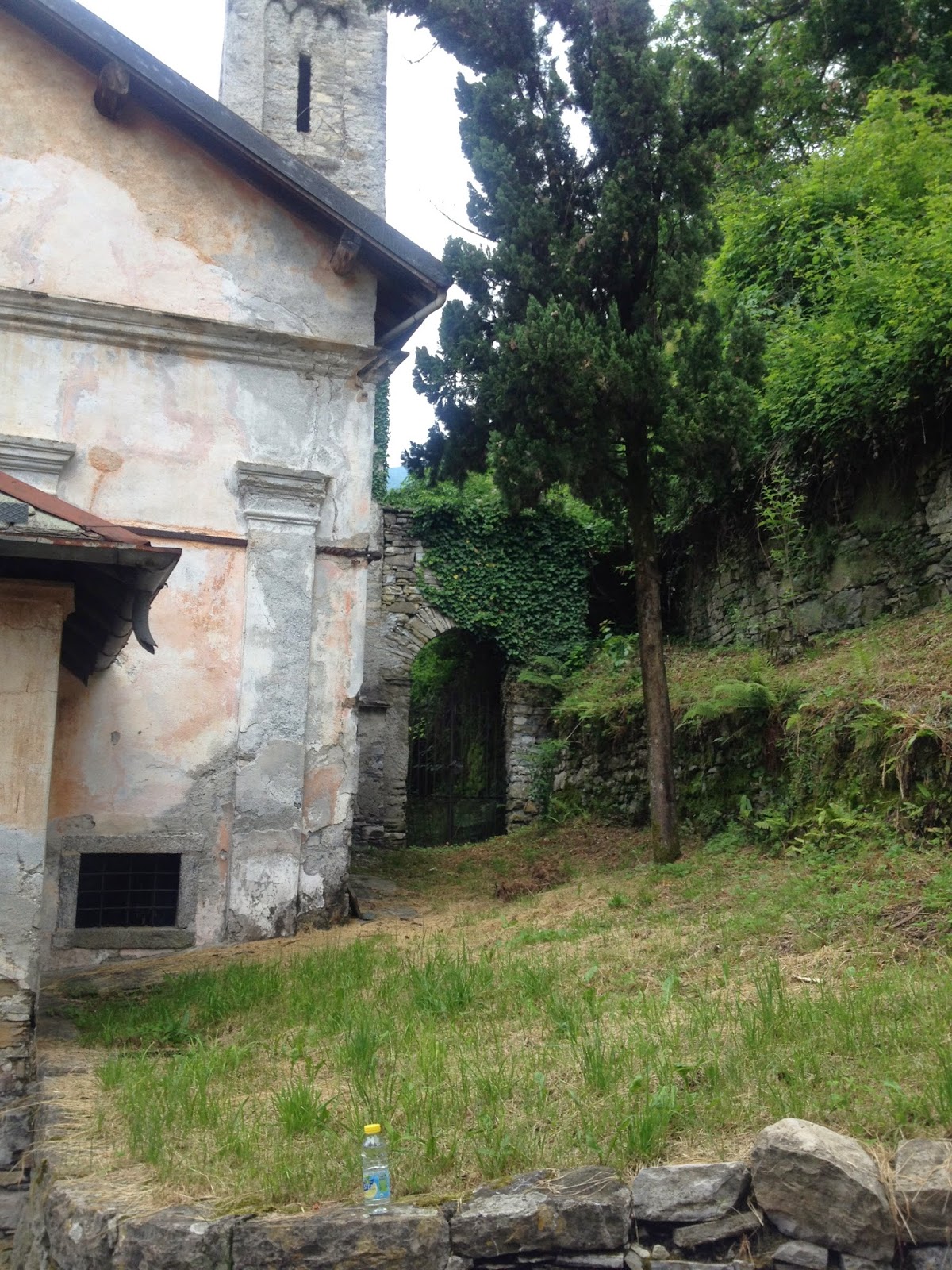 |
| The mysterious black gate. Photo by JB. |
 |
| The old chapel and the cemetery during the day. Photo by JB. |
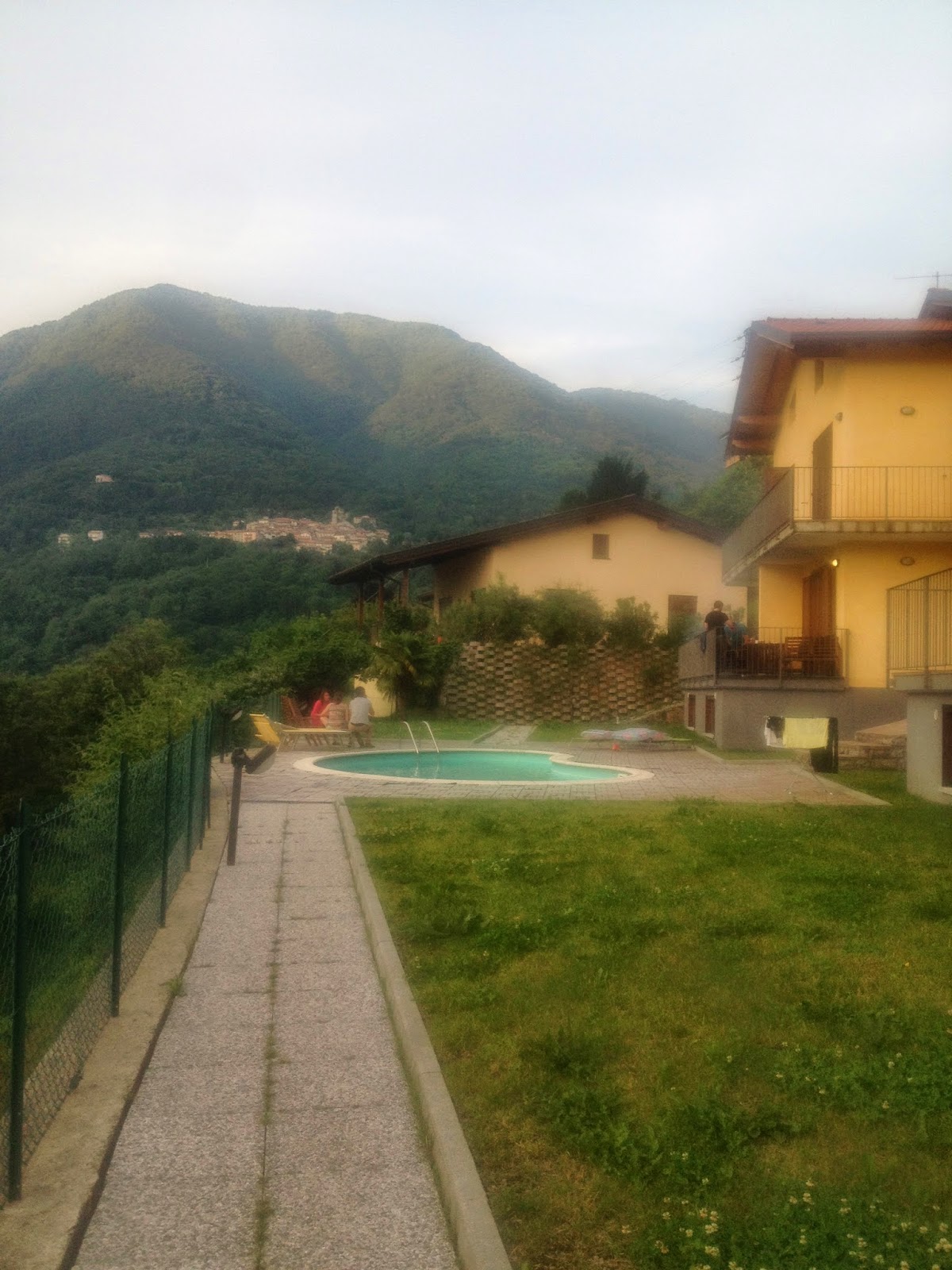 |
| The Tulip Villa. Photo by JB. |
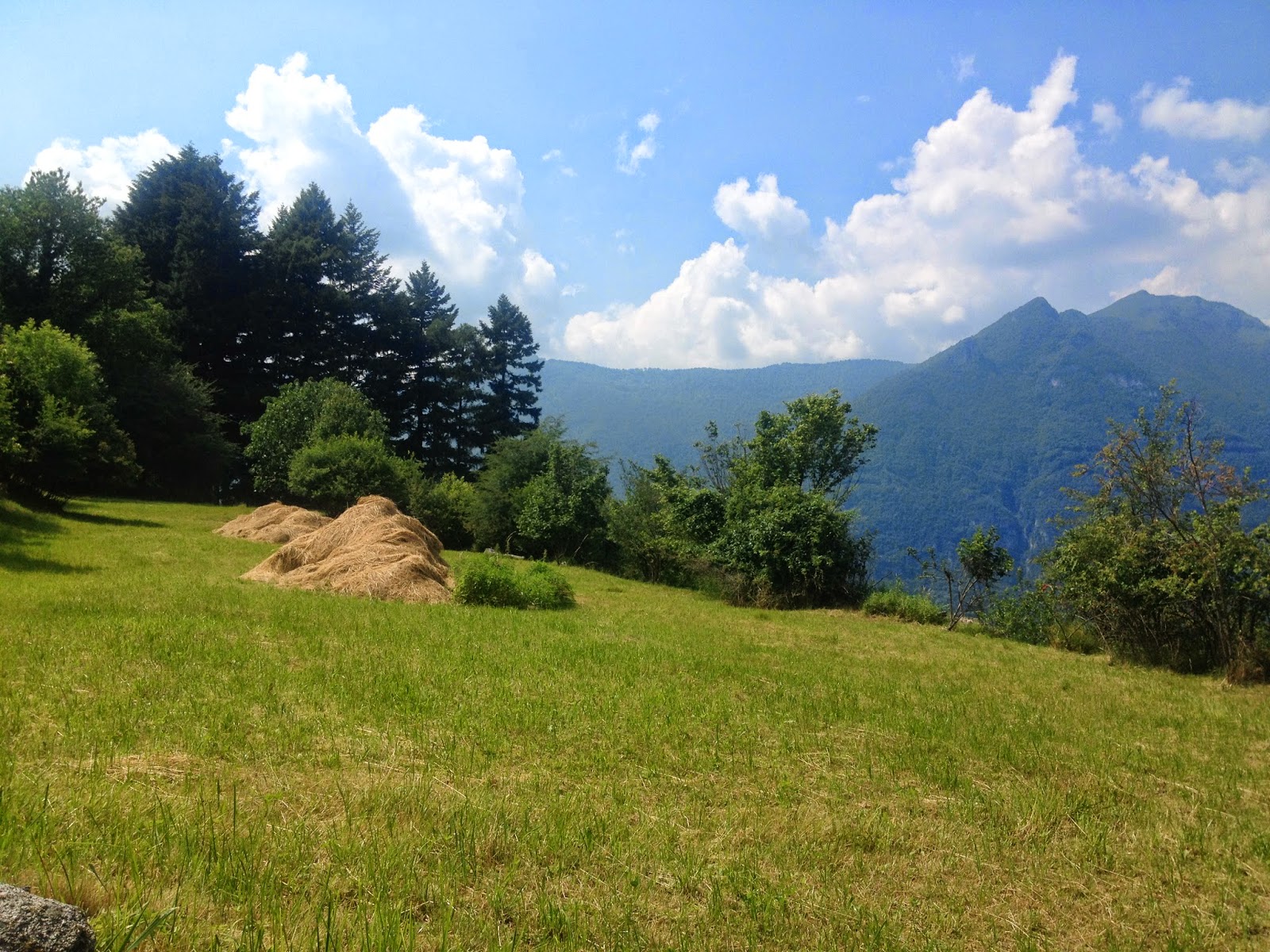 |
| In the hills of Molina. Photo by JB. |
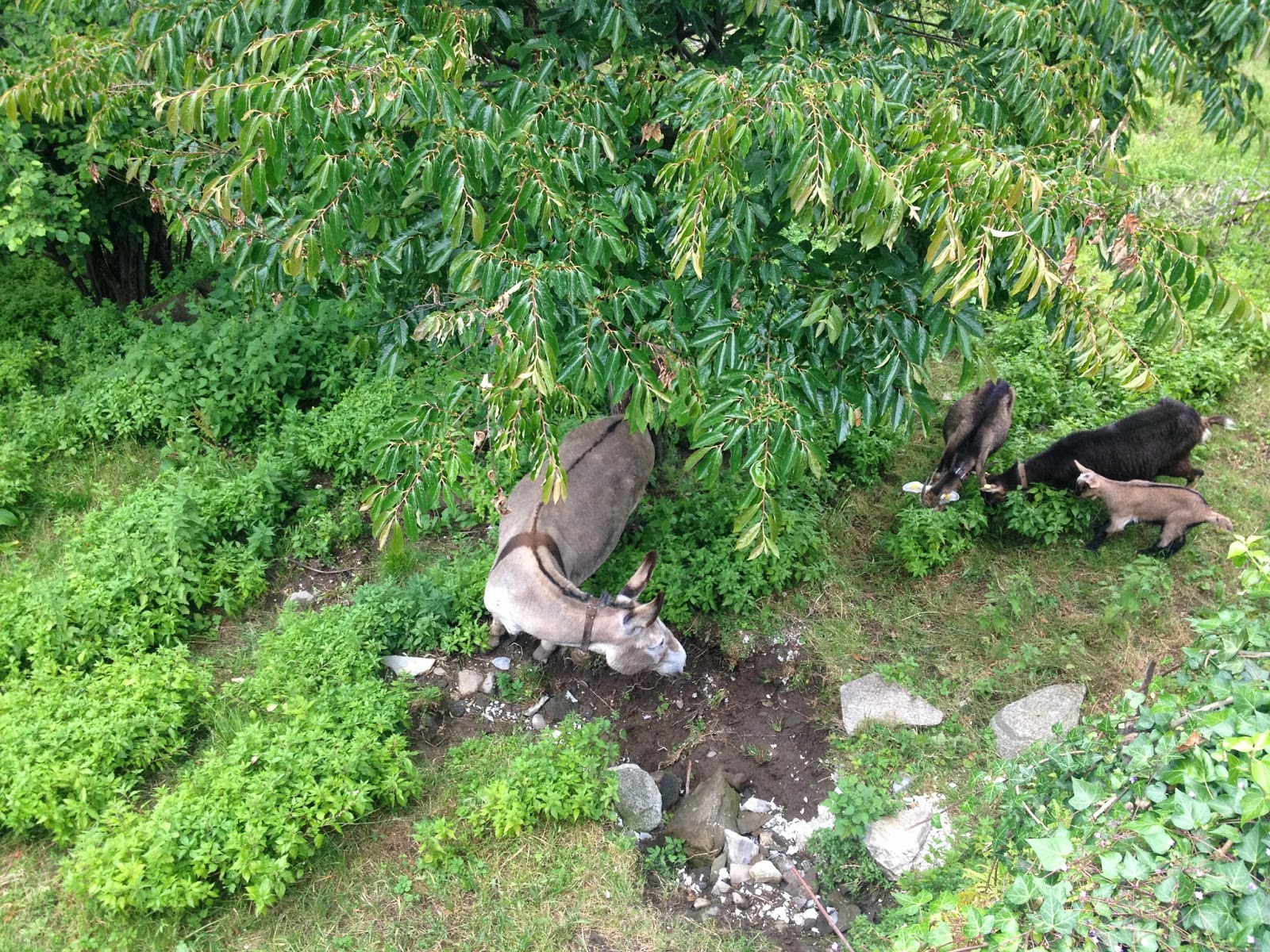 |
| Donkey on care duty. Photo by JB. |
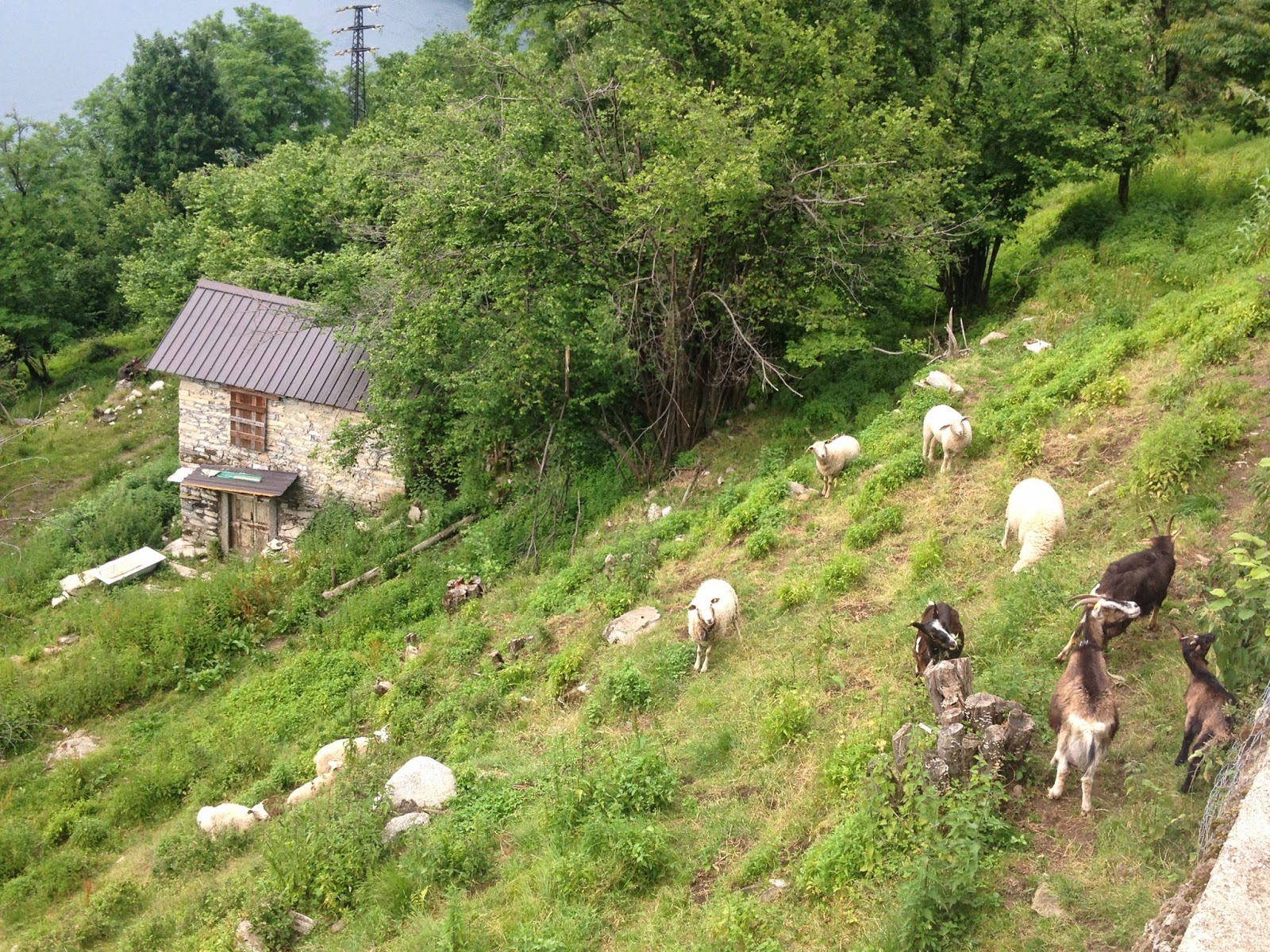 |
| Casa of a donkey, goats and sheep. Photo by JB. |
Subscribe to:
Posts (Atom)